

The Complete Guide to Folding Doors in Australia
Last updated: February 2026
Folding Doors, also referred to as Concertina Doors, Multifold Doors and many more names, have become an increasingly popular solution in Australian homes, workplaces, industrial, religious and education environments, because they offer a practical way to divide rooms / spaces without permanently closing them off. Designed to maximise flexibility while maintaining light and flow, modern folding door systems suit everything from living areas and home offices to wardrobes, multipurpose halls and function rooms. Hospitality applications such as the soccer club in Perth, for example, worked very well especially in high-traffic and heavy-duty applications.
But with so many options available — types, materials, configurations, track systems, and acoustic features — choosing the right folding door can feel overwhelming.
This guide explains everything you need to know, from how they work and what they cost to how to select a system that performs reliably for years.
What Are Folding Doors?
In a simple definition, Folding doors or Concertina Doors are multi-panel door systems that glide along a track and stack neatly to one (single-door configuration) or both sides (bi-parting pair configuration) when opened.
Unlike traditional hinged doors, they require minimal swing space, making them ideal for areas where efficient use of floor space matters.
Common applications include: dividing open-plan living areas, creating private home office zones, separating bedrooms, enclosing wardrobes, improving room functionality, creating more rooms to hold multiple events, keeping heating and cooling more efficiently in an area, soundproofing an area and much more.
Why Folding Doors Are Growing in Popularity in Australia
Modern homes increasingly favour adaptable spaces. Wasted space is wasted real estate, and at today's prices, square meterage is precious.
Folding doors allow homeowners to quickly transform how a room functions without structural changes. Key benefits of Concertina doors include space efficiency, clean and modern appearance, smooth operations (with quality systems), flexible room layouts, improved privacy when needed, insulative and acoustic properties for energy efficiency and improved privacy when needed.
Well-engineered systems are also designed for durability, making them suitable for everyday use. Read more about how our customer in Adelaide benefitted from insulation and acoustics in their home.
Read more about why Australian-made matters, and advantages of choosing an Australian manufacturer.
Types of Folding Doors
There are various types Internal Folding Doors / Concertina Doors, as the definition of "Folding Doors" is very broad.
Not to be confused with bi-fold or tri-fold doors, folding doors are lighter and designed for smooth, quiet operation within the residential or commercial setting, making them perfect for almost any applications.
Typically the different types of folding doors (examples below refer to non-bifold or trifold designs) are identified based on the Folding Door Materials used for their finishes. Material choice influences not only appearance but also longevity and usability:
Timber (usually MDF processed panels) - solid build doors that are reliable. Typically finished with a thin decorative surface material, timber folding doors are heavy (15 - 25kg per sqm of opening), requiring heavy-duty structural support and bracing. Operationally, timber folding doors can be clunky and bulky making them more difficult to move. Due to the way the decorative surface material is applied, may cause peeling in corners.
Vinyl - perceived as the most affordable finish option and material of folding doors in the market, the vinyl is exceptional from an operational point of view. Easy-to-clean. As with the aluminium doors, these doors may be flimsy when pushed against due to the carriers used which are usually plastic-made - due to it's affordable selling-point, componentry used in these doors are also not as durable as other types of folding doors.
Premium grade upholstery - Our folding doors are made of thick, tear-proof premium-grade upholstery material laminated onto rigid ply, carried with double-wheel axled trolleys. The steel internal body structure delivers strength and long-lasting structure suitable for everyday use, and offers upgrade options such as energy efficiency and noise reduction qualities.

Vinyl Door

Timber Door
_JPG.jpg)
Premium Upholstery-grade
How Much Do Folding Doors Cost in Australia?
The golden question on the minds of anyone thinking of maximizing their space: what would the cost be.
Costs vary mainly depending on the size of the opening, material type, build and components of the door and installation requirements, among other factors, but most folding doors fall within a broad pricing spectrum.
Read our folding door cost guide.
Expect typical supply ranges to begin around the lower hundreds for systems with basic internals and extend into several thousand dollars for larger or premium configurations.
Choosing purely on price is rarely the best strategy — long-term usability often delivers greater value. The saying rings true: "buy cheap buy twice, buy well buy once". Take the example of schools in Melbourne and VIC where we have replaced timber accordion doors, after just a few years. Our doors last a long while, from the use of high-cycle and durable performance components.
Here are some thoughts on whether they are worth it for your home - read our article about pros, cons and uses of folding doors here.
What to Look For in a Quality Folding Door / Concertina Door System
Many home or business owners focus primarily on cost and/or appearance primarily when shopping and considering a Concertina Door, but might overlook the mechanical components that determine daily performance and longevity of the folding door system.
Key considerations to include:
Track Design - A high-quality track supports smoother movement. Simple is better, as complex track systems can be fickle - problems may more easily arise from the smallest factors like a little dust. A perfect example of this is how our folding door was chosen to be used as an office / meeting space at Garrang Willam Primary School in Truganina, Melbourne, which is used multiple times a day.
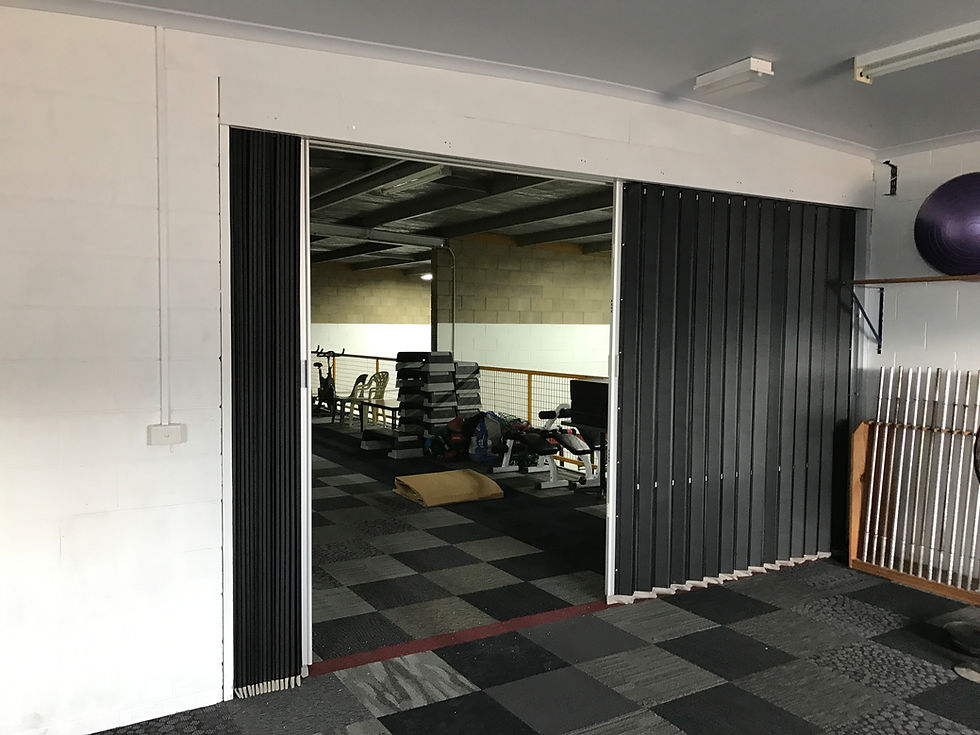
Hardware and Internals - High quality internals and hardware is important, as the stability and structure of the door is one of the biggest factors to the service life of the doors. Look for aluminium or steel carriers rather than plastic ones. Ask about joining material, carrier type, internal structure material, surface material and more. Better hardware typically means fewer adjustments over time. This was the key decision-making factor for our customer in Brisbane who wanted to divide a gym / fitness floor - the heavy-duty and hardiness of our folding doors, because of the strong internals.
Ease of Operation - Consider the weight of the doors and the latching systems. If you have a child or elder trying to operate a bulky door, then consider whether it would be practical for them to open and close the door that you are thinking of installing. Doors should glide comfortably without excessive force.
Ability to Sustain Abuse or Accidents - Would the door be able to withstand a few accidents that may damage its structure and integrity, or decorative surface? Would you be able to stand looking at it, if it had some damage that is visible eg. something you would not be able to repair?
Beyond appearance - Consider the ability for the door to provide more functionalities such as insulative / thermal comfort as well as noise blocking capabilities, which are helpful in keeping bills lower, creating a more sustainable living and working lifestyle, as well as being helpful in shared environments.
Read more about 7 important factors to look for in a good Concertina / Folding Door system.
Are Folding Doors Suitable for Small Spaces?
Absolutely — in fact, this is where (non bi-fold design) folding doors / concertina doors often outperform traditional doors. Some designs are bulky and need to be carefully considered whether they actually do save you space, but most slimline designs are suitable to be used for space saving.
Because panels stack rather than swing outward, they free up valuable floor space.
For small office spaces, apartments and compact homes such as granny flats, container homes and mancaves, this can significantly improve layout flexibility.
On the contrary, they can also be used for very large spaces - read about our latest project - supply of doors to the performers change rooms at the Home of The Arts in Surfer's Paradise, QLD.
Common Mistakes to Avoid When Choosing Folding Doors
Choosing based on price alone - lower upfront cost can mean higher long-term expense or shorter service life.
Read about how we replaced a broken low-cost vinylcloth concertina door at the Subiaco Football Club at Leederville Oval in Perth, with our COMFORTflo folding door that will last for years to come.
Ignoring track quality - The track determines how the door feels every day.
Not considering usage frequency - High-traffic areas demand stronger systems.
Skipping professional advice - Early guidance often prevents costly changes later, help narrow options quickly and ensure the system suits your home, workplace or environment long-term.
Choose a supplier who is ready to help and responsive.
By choosing a quality concertina door - one that is durable, strong and well built, our customers have even avoided having to build walls - rather, using folding doors to partition large open areas.

Final Thoughts
Folding doors are a smart way to enhance flexibility, privacy, and usability within modern Australian homes.
By understanding materials, system quality, and pricing considerations, homeowners and business owners can make confident decisions that support both comfort and durability.
Whether you're early in your research or preparing for a project, taking the time to evaluate your options carefully will help ensure lasting satisfaction.
Need Guidance on Choosing Folding Doors?
Selecting the right system can feel complex with so many variables involved.
Unsure how to measure? Check out our guide on measuring, configurations, preparing the opening and tolerances.
If you'd like tailored advice or help identifying the best option for your space, speaking with a specialist is the best place to start.


